Branding
SPECULATIVE DESIGN BOARD GAME
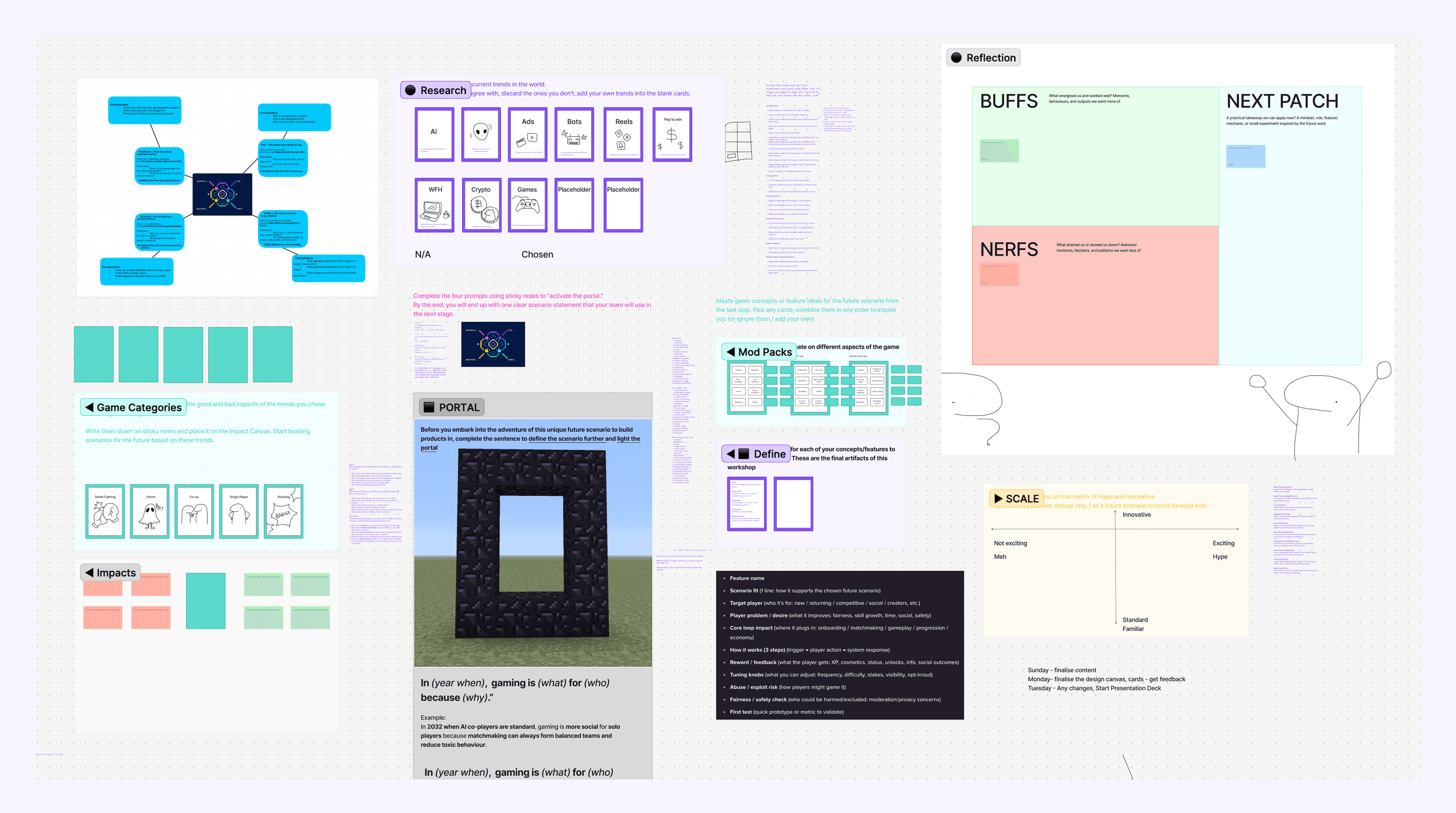
The board game was developed as a speculative design tool to explore future possibilities within the gaming industry. Rather than focusing on winning, the experience encourages strategic thinking, discussion, and reflection on potential industry shifts. The design process followed a structured workshop format, guiding participants step by step through scenario exploration, debate, and collective decision-making.
Year :
2026
Industry :
Education
Client :
Harbour Space University
Project Duration :
3 weeks

Concept & Monster :
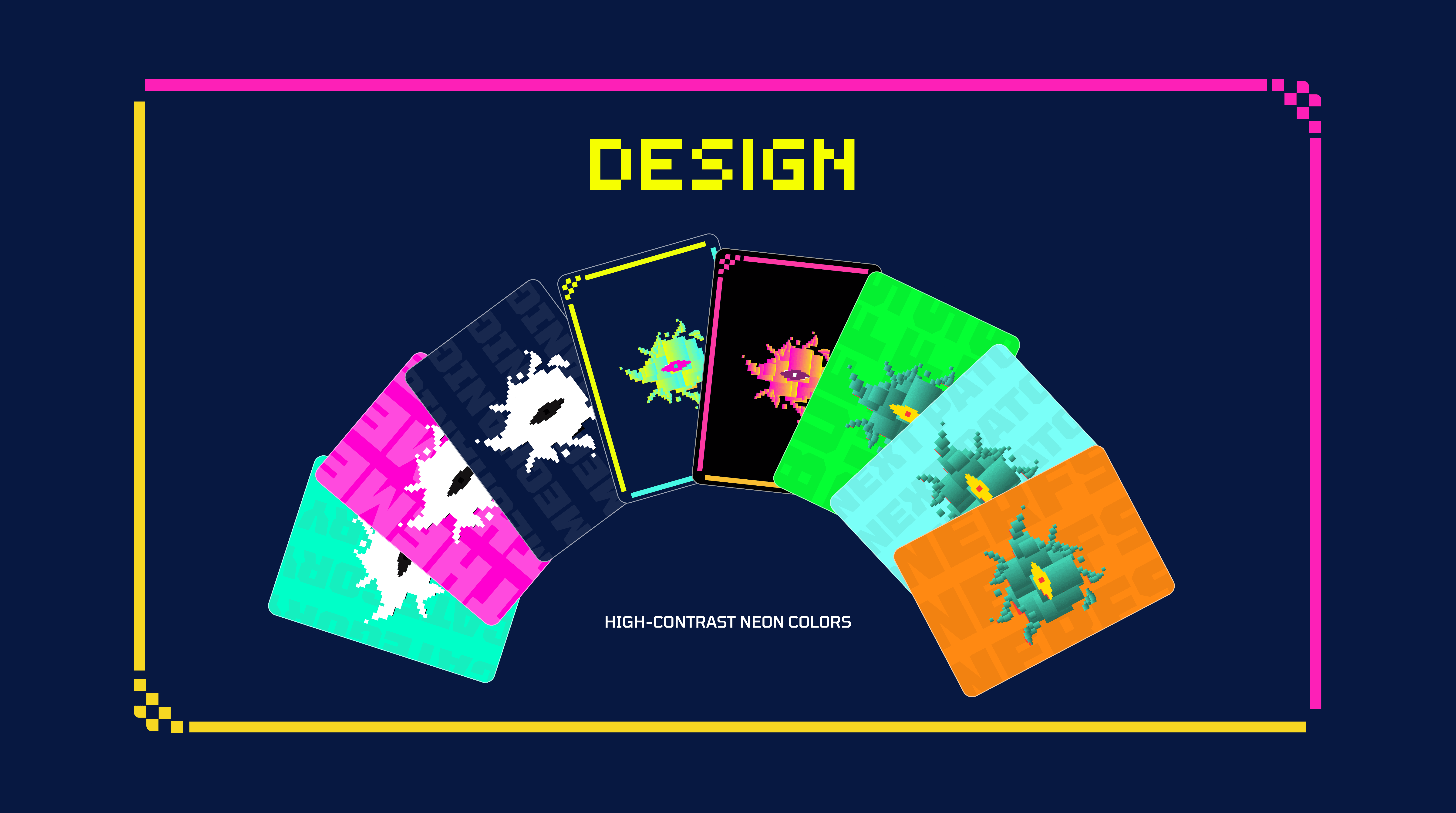
The core concept centers around imagining future challenges in the gaming industry through fictional “monsters.”
Each monster represents a potential threat or disruption, such as ethical dilemmas, technological shifts, monetization conflicts, or industry instability. These symbolic creatures help externalize complex problems, making abstract risks easier to discuss and analyze.
By confronting these monsters, teams practice anticipating challenges and developing strategic responses.
Workshop Process & Pattern
The board game follows a clear workshop pattern:
Introduction to the speculative scenario
Define the monster (the core problem or disruption)
Draw situation cards
Debate possible actions
Reflect and document insights
The pattern creates rhythm and structure, ensuring every step contributes to meaningful discussion rather than random gameplay.

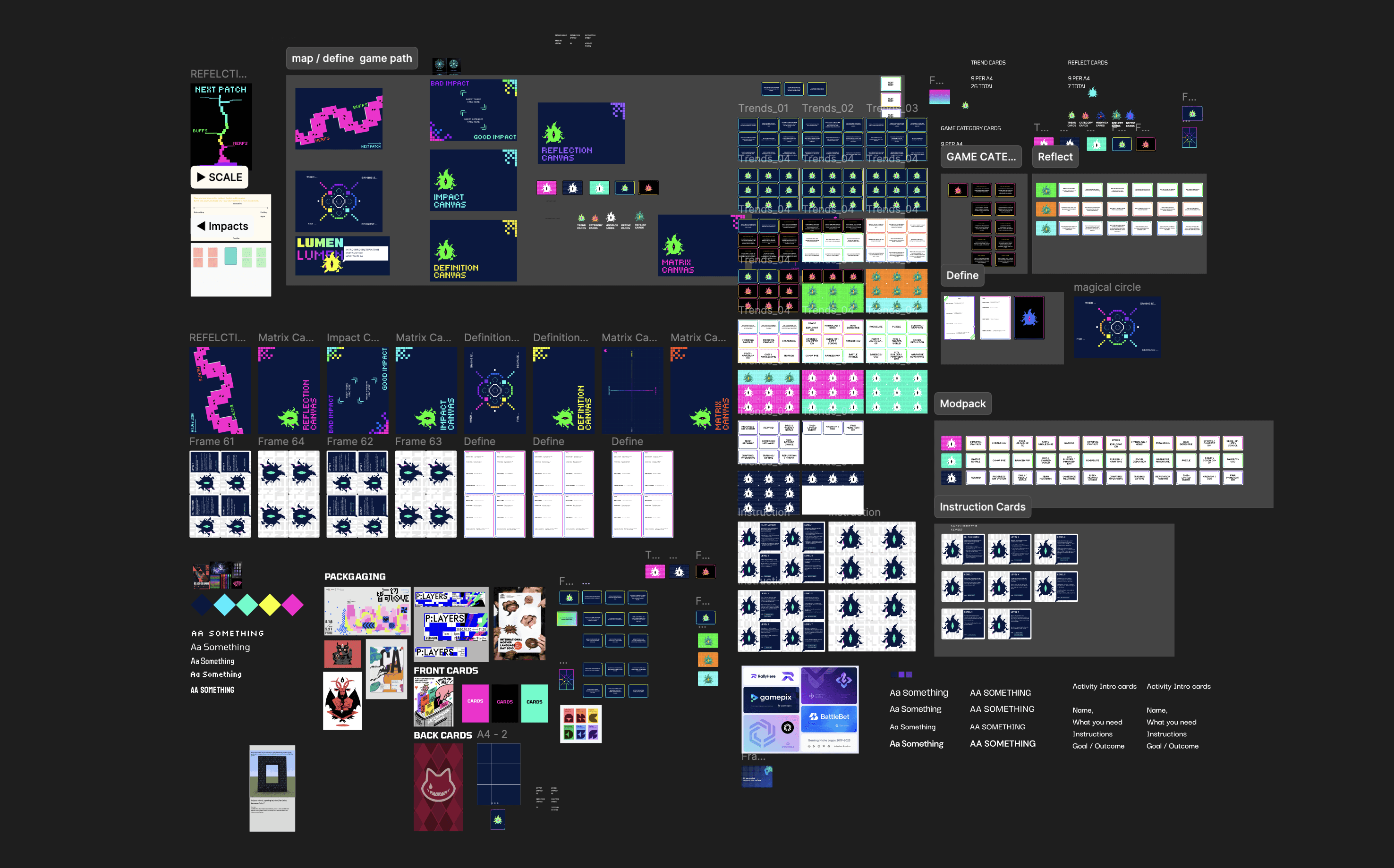
Define Card & Reflection Board
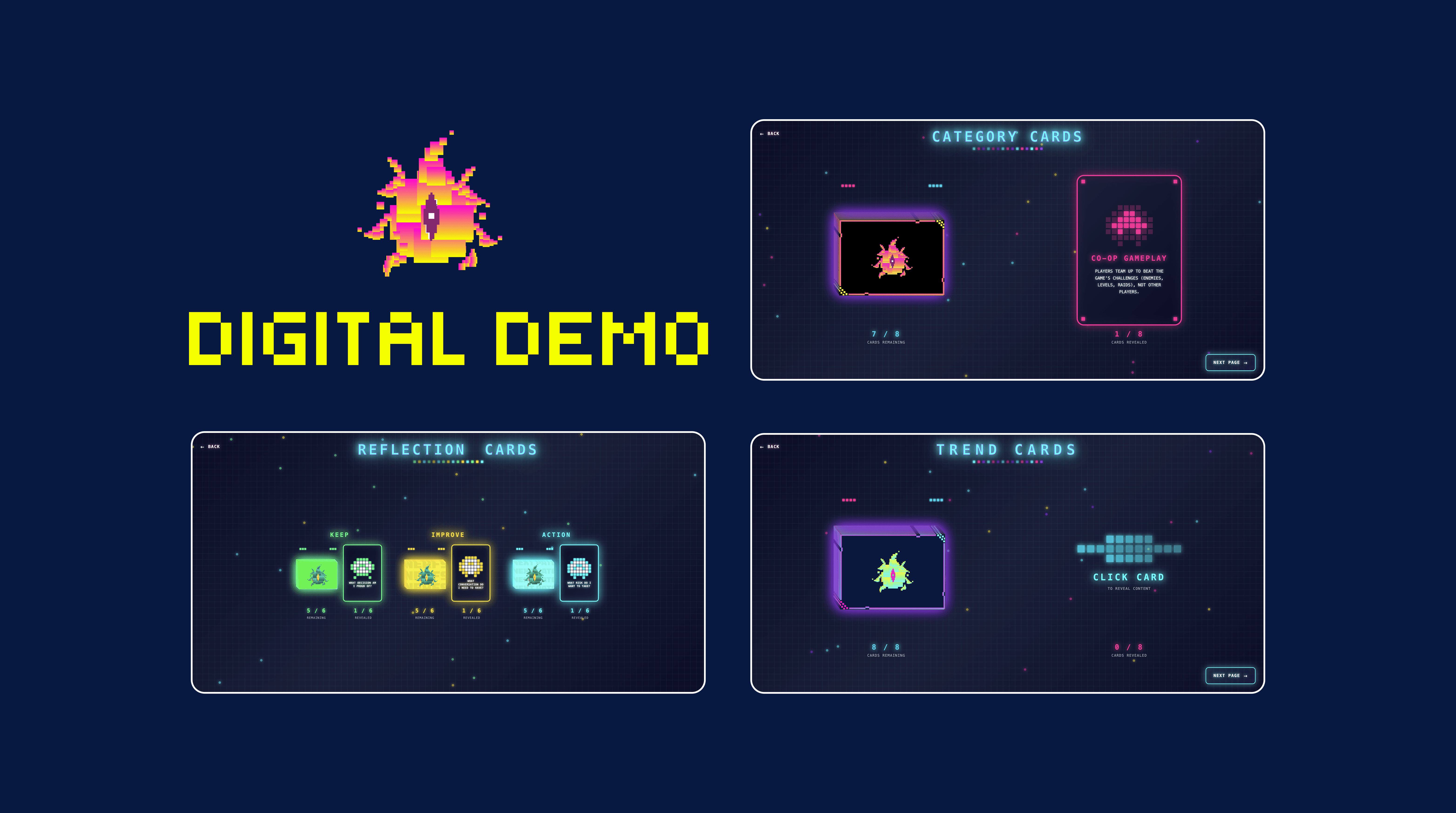
The Define Card helps teams clarify the core issue before jumping to solutions. It ensures that everyone aligns on what the “monster” represents and why it matters.
The Reflection Board is used to document decisions, insights, and disagreements throughout the session. This prevents valuable ideas from being forgotten and allows teams to track how their thinking evolves.
Together, these tools transform the board game into a collaborative strategy exercise.
Team Dynamic Summary
The workshop revealed important team dynamics:
Different members approached problems from distinct perspectives
Some prioritized risk avoidance, while others favored bold experimentation
Structured discussion encouraged quieter voices to contribute
Conflict became productive when guided by clear steps
Overall, the activity strengthened communication, surfaced hidden assumptions, and improved collective problem-solving within the team.

More Projects

Branding
SPECULATIVE DESIGN BOARD GAME
The board game was developed as a speculative design tool to explore future possibilities within the gaming industry. Rather than focusing on winning, the experience encourages strategic thinking, discussion, and reflection on potential industry shifts. The design process followed a structured workshop format, guiding participants step by step through scenario exploration, debate, and collective decision-making.
Year :
2026
Industry :
Education
Client :
Harbour Space University
Project Duration :
3 weeks
Concept & Monster :
The core concept centers around imagining future challenges in the gaming industry through fictional “monsters.”
Each monster represents a potential threat or disruption, such as ethical dilemmas, technological shifts, monetization conflicts, or industry instability. These symbolic creatures help externalize complex problems, making abstract risks easier to discuss and analyze.
By confronting these monsters, teams practice anticipating challenges and developing strategic responses.
Workshop Process & Pattern
The board game follows a clear workshop pattern:
Introduction to the speculative scenario
Define the monster (the core problem or disruption)
Draw situation cards
Debate possible actions
Reflect and document insights
The pattern creates rhythm and structure, ensuring every step contributes to meaningful discussion rather than random gameplay.
Define Card & Reflection Board
The Define Card helps teams clarify the core issue before jumping to solutions. It ensures that everyone aligns on what the “monster” represents and why it matters.
The Reflection Board is used to document decisions, insights, and disagreements throughout the session. This prevents valuable ideas from being forgotten and allows teams to track how their thinking evolves.
Together, these tools transform the board game into a collaborative strategy exercise.
Team Dynamic Summary
The workshop revealed important team dynamics:
Different members approached problems from distinct perspectives
Some prioritized risk avoidance, while others favored bold experimentation
Structured discussion encouraged quieter voices to contribute
Conflict became productive when guided by clear steps
Overall, the activity strengthened communication, surfaced hidden assumptions, and improved collective problem-solving within the team.
More Projects
Branding
SPECULATIVE DESIGN BOARD GAME
The board game was developed as a speculative design tool to explore future possibilities within the gaming industry. Rather than focusing on winning, the experience encourages strategic thinking, discussion, and reflection on potential industry shifts. The design process followed a structured workshop format, guiding participants step by step through scenario exploration, debate, and collective decision-making.
Year :
2026
Industry :
Education
Client :
Harbour Space University
Project Duration :
3 weeks
Concept & Monster :
The core concept centers around imagining future challenges in the gaming industry through fictional “monsters.”
Each monster represents a potential threat or disruption, such as ethical dilemmas, technological shifts, monetization conflicts, or industry instability. These symbolic creatures help externalize complex problems, making abstract risks easier to discuss and analyze.
By confronting these monsters, teams practice anticipating challenges and developing strategic responses.
Workshop Process & Pattern
The board game follows a clear workshop pattern:
Introduction to the speculative scenario
Define the monster (the core problem or disruption)
Draw situation cards
Debate possible actions
Reflect and document insights
The pattern creates rhythm and structure, ensuring every step contributes to meaningful discussion rather than random gameplay.
Define Card & Reflection Board
The Define Card helps teams clarify the core issue before jumping to solutions. It ensures that everyone aligns on what the “monster” represents and why it matters.
The Reflection Board is used to document decisions, insights, and disagreements throughout the session. This prevents valuable ideas from being forgotten and allows teams to track how their thinking evolves.
Together, these tools transform the board game into a collaborative strategy exercise.
Team Dynamic Summary
The workshop revealed important team dynamics:
Different members approached problems from distinct perspectives
Some prioritized risk avoidance, while others favored bold experimentation
Structured discussion encouraged quieter voices to contribute
Conflict became productive when guided by clear steps
Overall, the activity strengthened communication, surfaced hidden assumptions, and improved collective problem-solving within the team.